
Vestibular neuritis
Vestibular neuritis is a condition in which the vestibular organ suddenly functions less well on one side. This often causes a severe attack of rotational vertigo that can last for several days.
Key points
- In vestibular neuritis, the vestibular nerve that sends signals from the vestibular organ to the brain becomes inflamed.
- This causes a sudden disruption of the balance system, resulting in severe rotational vertigo.
- The rotational vertigo can last for hours to days and is often accompanied by nausea or vomiting.
- After the acute phase, instability and sensitivity to movement may persist for some time.
- The condition is likely caused by a viral infection.
- Vestibular rehabilitation can support recovery after the acute phase.
Symptoms
- Sudden severe rotational vertigo that can last for hours to days.
- Nausea or vomiting.
- Difficulty walking or standing.
- Sensitivity to head movements.
- Instability and sensitivity to movement after the acute phase.
Causes
- Vestibular neuritis is likely caused by inflammation of the vestibular nerve (nervus vestibularis).
- The inflammation may be the result of a viral infection.
- The inflammation causes a strong asymmetry between the signals from the left and right vestibular organs, leading to severe rotational vertigo.
Treatments
- It is important that the diagnosis is made by a doctor first, as sudden dizziness can also have other causes.
- After the acute phase, vestibular rehabilitation can help promote recovery of the balance system.
- Through targeted exercises, the body can learn to cope with the reduced information from the vestibular organ.
What is vestibular neuritis?
In vestibular neuritis, the vestibular nerve that sends signals from the vestibular organ to the brain becomes inflamed. This causes a sudden disruption of the balance system.
Because one vestibular organ still sends signals while the other functions less well, a strong asymmetry occurs in the information reaching the brain. This can lead to severe rotational vertigo.
Vestibular nerve
Inflamed
The nervus vestibularis becomes inflamed, causing one vestibular organ to function less well.
Sudden onset
Acute rotational vertigo
Symptoms usually start suddenly and can be very intense.
Several days
Prolonged attack
The severe vertigo can last for hours to days.
How is vestibular neuritis assessed?
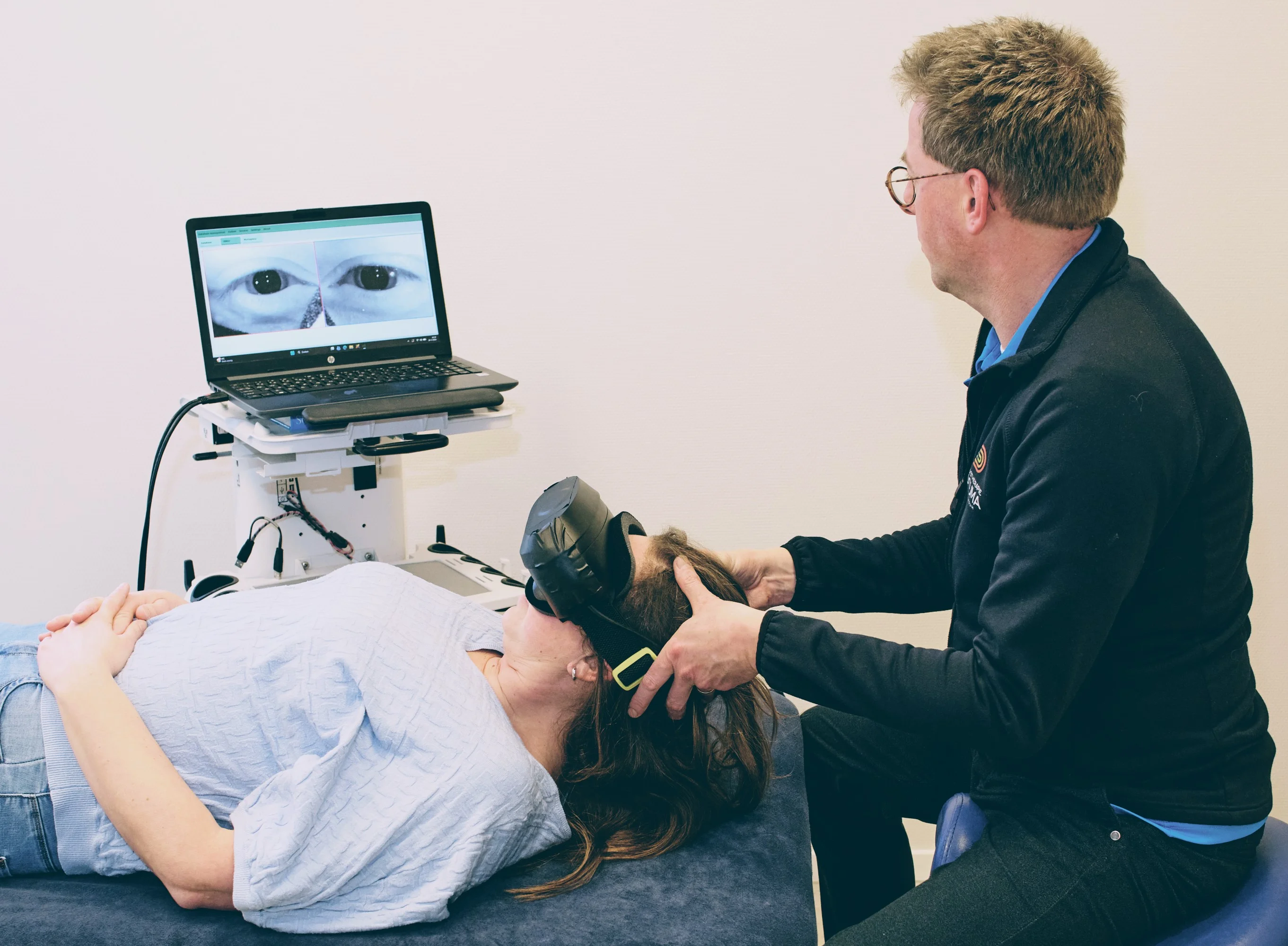
During the assessment, the function of the vestibular system and eye movements are examined.
Reduced function of the vestibular organ may show characteristic abnormalities, for example during the Head Impulse Test or when evaluating nystagmus.
What can physical therapy offer?
After the acute phase, vestibular rehabilitation can help promote recovery of the balance system.
Through targeted exercises, the body can learn to cope with the reduced information from the vestibular organ.
.webp)

Would you like to have your symptoms assessed?
An initial assessment can help determine whether your symptoms fit vestibular neuritis and which guidance may be appropriate.