
PPPD
Persistent Postural-Perceptual Dizziness
PPPD is a condition in which people experience long-term dizziness or instability. The symptoms are usually present daily, often worsen when standing or walking, and can persist for months.
Key points
- PPPD is a condition in which the processing of balance information in the brain becomes disrupted.
- Symptoms usually do not consist of brief attacks of rotational vertigo, but rather a continuous feeling of instability or a light-headed, floating sensation.
- Symptoms often worsen with standing, walking, moving, or in busy visual environments.
- According to international diagnostic criteria, symptoms are typically present for at least three months.
- PPPD often develops after a previous vestibular condition such as BPPV, vestibular neuritis, or vestibular hypofunction.
- Vestibular rehabilitation can be an important part of treatment.
Symptoms
- Persistent dizziness or instability.
- A light-headed or floating sensation.
- Symptoms that increase when standing or walking.
- Symptoms in busy visual environments such as shops, traffic, or crowded spaces.
- Sensitivity to movement.
- Difficulty concentrating or fatigue.
Causes
- PPPD is caused by disrupted processing of balance information in the brain. The balance system becomes oversensitive to movement, posture, and visual stimuli.
- PPPD often develops after an event that disturbs the vestibular system, such as BPPV, vestibular neuritis, vestibular hypofunction, or Ménière's disease.
- Other events such as illness, stress, or a medical episode may also play a role.
Treatments
- Vestibular rehabilitation can be an important part of treatment for PPPD.
- Therapy focuses on retraining the balance system and improving tolerance to movement and visual stimuli.
- Treatment may include balance and stability exercises, gaze stabilisation exercises, habituation exercises, and gradual reintroduction of daily activities.
- Collaboration with other healthcare providers such as a GP, occupational therapist, or psychologist may sometimes be helpful.
What is PPPD?
PPPD is a condition in which the processing of balance information in the brain becomes disrupted. Normally, the vestibular organ, the eyes, and the sensors in muscles and joints work together to regulate balance and orientation.
In PPPD, this coordination is disturbed, causing the balance system to become oversensitive to movement, posture, and visual stimuli.
Processing
Balance information in the brain
Balance information processing is disrupted, without always involving structural damage to the vestibular organ.
Visual stimuli
Increased sensitivity
Busy visual environments such as shops and traffic can trigger or worsen symptoms.
Long-lasting
At least three months
Symptoms are usually present daily and, according to international criteria, persist for at least three months.
How long do PPPD symptoms last?
Symptoms of PPPD are usually long-lasting. According to international diagnostic criteria, symptoms are typically present for at least three months.
Symptoms may be present daily, but their intensity can vary. Some days may be milder, while other days the symptoms are more noticeable.
With appropriate treatment and guidance, many people can experience gradual improvement. Recovery usually happens step by step and may take time.
How is PPPD assessed?
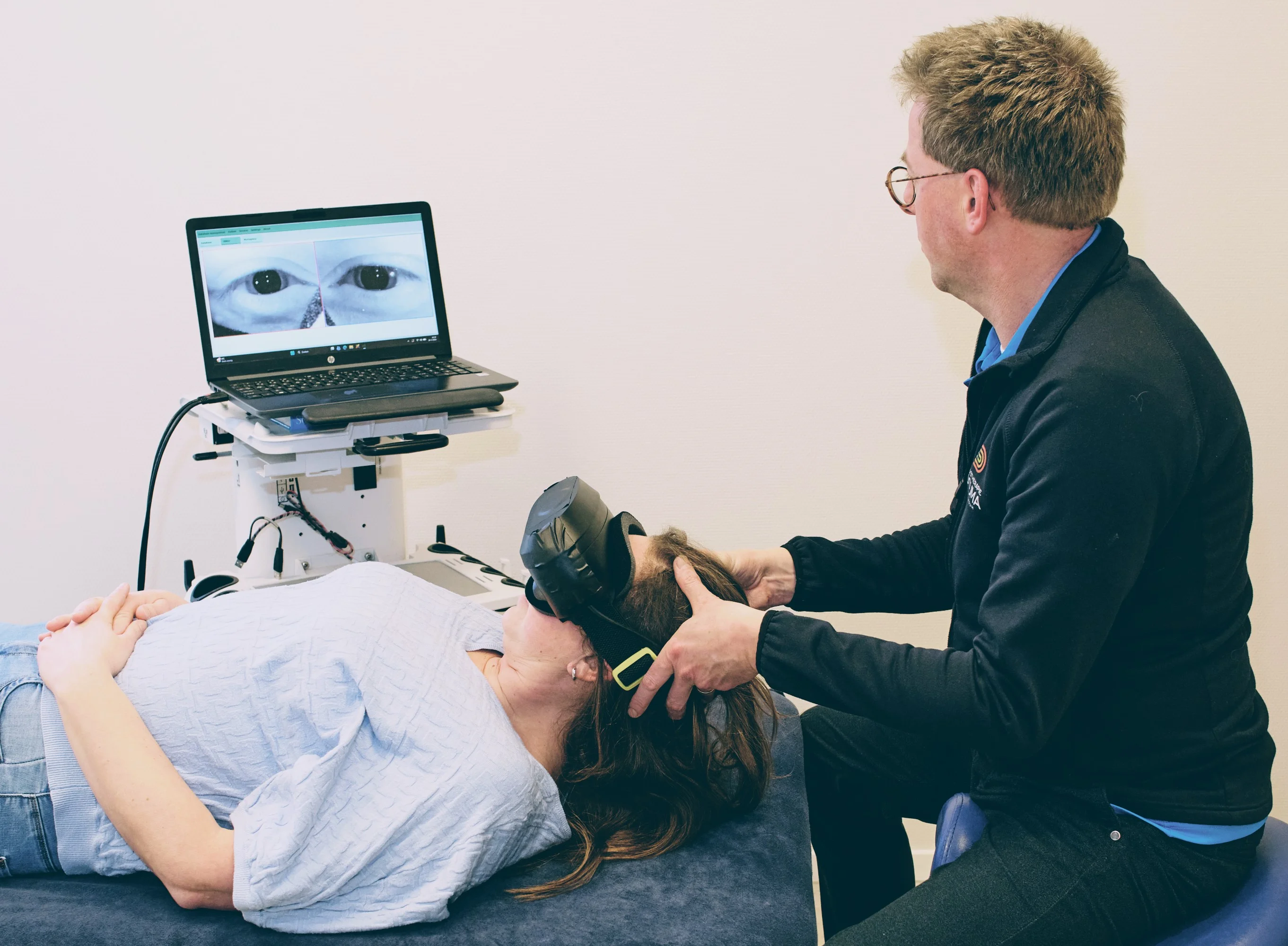
The diagnosis of PPPD is usually made based on the symptom pattern and by excluding other causes of dizziness.
During the assessment, the course and pattern of symptoms, any previous vestibular conditions, balance and stability, and responses to movement and visual stimuli are evaluated.

Would you like to have your symptoms assessed?
An initial assessment can help determine whether your symptoms fit PPPD and which guidance may be appropriate.